
Indication 5: Seborrhoea & Seborrheic Dermatitis
What is Seborrhoea?
Seborrhoea affects both men and women.
What is Seborrheic Dermatitis?
Seborrheic Dermatitis is a common condition that affects 4% of the UK population. It tends to be more common in men than women.
If seborrheic dermatitis affects the scalp this is referred to as dandruff due to the scale that is visible in the hair. It is sometimes referred to as seborrheic eczema due to the red, inflamed, scaly patches resembling eczema. Unlike regular eczema or dermatitis, seborrheic dermatitis affects areas of increased sebum production and is therefore commonly associated with seborrhoea. In fact sometimes both terms seborrhoea and seborrheic dermatitis are used interchangeably.
For sake of precision:
Seborrhoea
Excess sebum production from oil glands. This results in the affected skin becoming greasy and shiny.
Seborrheic Dermatitis
An inflammatory reaction of the skin that is triggered in areas of excess oil production that results in formation of a rash that is red, greasy, scaly and itchy.
Causes of Seborrhoea


Causes of Seborrheic Dermatitis
Seborrhoea - Excessive production of sebum by the oil secreting (sebaceous) glands of the skin linked to baseline genetic factors and often exacerbated hormonal factors.
Increased growth of Malassezia yeast in these excessively oily areas
An immune reaction by the body triggered in response to the increased levels of Malassezia yeast and oleic acid ( a byproduct Malassezia yeast growth on the skin). This immune reaction occurs in genetically predisposed individuals but is also triggered by factors such as stress, tiredness, and cold dry weather conditions.
Certain medications such as anti-cancer drugs and psychiatric medication such as lithium (used in treatment of bipolar affective disorder) can aggravate seborrheic dermatitis.
Which areas of the body are affected by Seborrheic dermatitis?
Scalp (dandruff)
Face
- nose and cheek creases
- eyebrows – red flaky rash around the eyebrows
- eyelids – the eyelids / lash line (seborrheic blepharitis)
- ear – in and around the ear and in the ear canal
Skin folds
- Armpits
- Groin
- Crease below the belly
- Crease below the breasts
Central chest area and between breasts
Central back between shoulder blades
Seborrheic Dermatitis in Darker Skin types
It is worth noting that in patients who have darker skin types seborrheic dermatitis can trigger darkening of the rash affected skin. This is known as Post Inflammatory Hyperpigmentation (PIH) of the affected areas. Often in patients with a darker skin type the areas that are routinely affected by the rash appear darker in colour when compared to surrounding areas of skin. These dark patches are of significant cosmetic nuisance and can significantly affect the self-confidence of men and women with darker skin types who suffer with seborrheic dermatitis.
What does Seborrheic Dermatitis Rash look like?
Please take a look at this excellent photo collection of seborrheic dermatitis cases from the famous Dermnet website. It will show you how typical cases of seborrheic dermatitis look in different areas of the face, scalp and body.
For further information on seborrheic dermatitis please take a look at the British Association of Dermatology leaflet on Seborrheic Dermatitis by clicking on the link below. A link to the National Eczema Society factsheet on Seborrheic Eczema is also included for further information. These are reliable sources of information for people suffering with seborrheic dermatitis.
https://www.bad.org.uk/pils/seborrhoeic-dermatitis/
https://eczema.org/wp-content/uploads/Seborrhoeic-dermatitis-in-adults-Dec-22-1.pdf

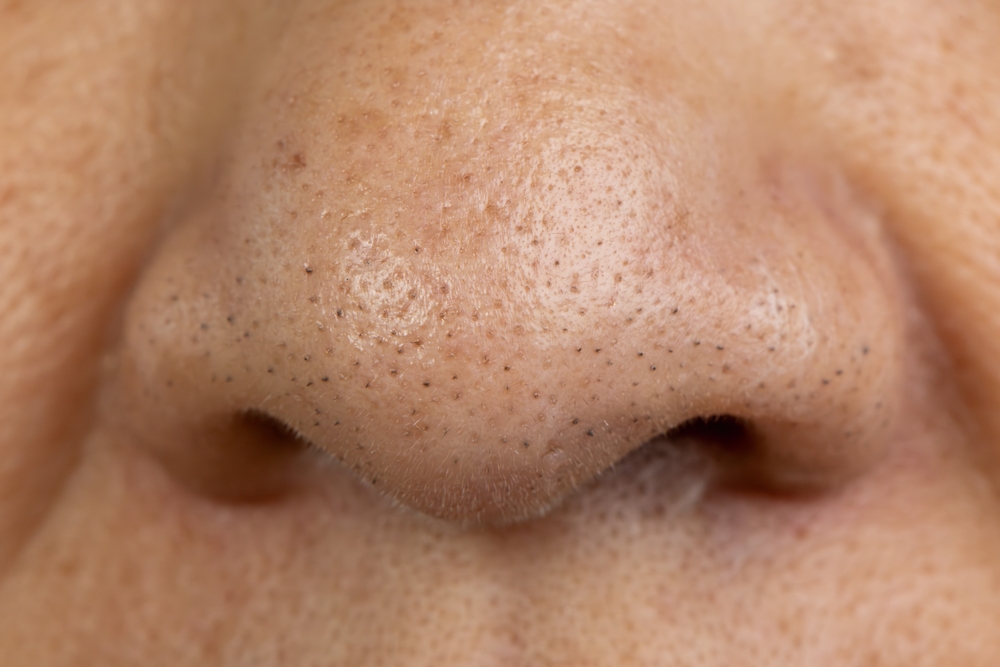
Facial Seborrhoea
The facial T-Zone comprises the forehead, nose and chin.
Please look at the image
Seborrhoea and Seborrheic Dermatitis severity and potential longterm complications
Mild seborrhoea is regarded as a cosmetic nuisance rather than a true condition. Most sufferers both accept that they have an oily or combination skin type that is naturally more greasy in the T-Zone.
Moderate to severe seborrhoea can result in significant pshychosocial impact to the sufferer and therefore warrants more significant treatment
Seborrheic Dermatitis is a chronic issue that triggers a red, greasy and uncomfortable rash to appear. As well as being unpleasant and uncomfortable the rash is highly visible especially when the face is affected. Frequent episodes of seborrheic dermatitis that are left untreated can lead to further skin problems such as:
Infection (Impetiginized Seborrheic Dermatitis)
The supporting medical evidence for low dose Oral Isotretinoin therapy in Seborrhoea and Seborrheic Dermatitis
The articles below show the evidence base for oral isotretinoin in moderate to severe seborrheic dermatitis. The link (found below the summarised conclusion) will take you to a systematic review that was published in the November 2023 edition of the Journal of the American Academy of Dermatology. This study reviewed a total of 7 relevant studies that focussed on treatment of moderate-severe facial and scalp seborrheic dermatitis with oral isotretinoin. The conclusion of this systematic review study is summarised below:
Conclusion: Isotretinoin treatment resulted in greater improvements in SD symptoms when compared to oral itraconazole, anti-fungal shampoo, or salicylic acid-containing soap. Patients reported less pruritus with isotretinoin (81.9% mean improvement, 95% CI 68.5% to 95.2%) than itraconazole (64.6% mean improvement, 95% CI 53.0% to 76.2%) (P = .003).2 Of 3 studies totaling 104 patients reporting SD severity on validated scales, 4 patients (4%) reported little-to-no benefit with isotretinoin. The remaining 100 patients (96%) had at least some improvement in SD with isotretinoin, and 47 patients (45%) had complete/excellent clearance. SD improved with isotretinoin treatment across all studies. Truncal SD had the greatest improvement, followed by the face, then scalp.3 Relapse rate following isotretinoin cessation was 11.1% at 3 months.4 Patient-reported QoL postisotretinoin significantly improved (P < .001),5 independent of isotretinoin dose. On a nominal patient satisfaction scale, 30 patients (63%) reported the greatest improvement with isotretinoin, compared to 2 patients (4%) who reported no improvement.4 No major adverse events were reported.
This further study was published in the Journal of the American Academy of Dermatology in May 2025.
The study title is Efficacy, safety, and recurrence in seborrheic dermatitis: A dose-dependent analysis of oral isotretinoin (10 mg vs 20 mg).
The conclusion of the study is summarised as follows:
Conclusion: Both 10 mg and 20 mg isotretinoin effectively reduce disease severity in seborrheic dermatitis, but the 20 mg dose was associated with superior disease control, lower recurrence rates, and higher patient satisfaction.
A link to this study is included below.
https://pubmed.ncbi.nlm.nih.gov/40354944/
This further study below was a retrospective study published in the June 2023 edition of the International Journal of Dermatology. The study concluded that no serious adverse effects were observed when using low dose therapy of 10-20mg daily in patients with moderate to severe seborrheic dermatitis.
MALE Treatment of Seborrhoea and Seborrheic dermatitis with Oral Isotretinoin
Excessive oil production or Seborrhoea is difficult to treat in men. In men the only effective option to reduce excess oil production is oral isotretinoin. It is a highly effective treatment and very safe for adult males. The doses required to reduce oil production significantly are extremely low. Reducing oil production with isotretinoin in males who suffer with moderate to severe seborrheic dermatitis is an excellent treatment when effective longterm control is required. Males suffering with frequent episodes and severe episodes of seborrheic dermatitis can effectively bring the situation under control by microdosing oral isotretinoin.
A dose of typically 10mg – 20mg a day is required to shrink sebaceous glands and bring excessive oil production under control. Oral isotretinoin can be taken long term at this dose safely in men for the treatment of seborrhoea and seborrheic dermatitis.
At small doses (microdosing) isotretinoin regulates and prevents seborrhoea and as a consequence seborrheic dermatitis trigger factors are reduced. Given that most side effects of isotretinoin are dose related they cause little issue to men in the long term. For men there is no issue with isotretinoin causing problems with sperm production. The drug itself is not significantly detectable in sperm. Therefore men who take oral isotretinoin are safe to father children whilst on oral isotretinoin.
If you are an adult male (over 18yrs) commencing oral isotretinoin treatment for seborrheoa or seborrheic dermatitis with Dermacne, treatment is straight forward. Once your initial consultation is complete if oral isotretinoin treatment is a suitable option you can be commenced on your medication as soon as your initial blood test is completed and the results are assessed. You will then need follow up blood tests at 1 month and three monthly intervals after that. If your routine monitoring and blood tests are stable then with low dose isotretinoin (microdosing) courses for seborrheoa 6 monthly blood tests and monitoring may be suitable after the first 12 months of treatment.
The key advantage is that after completing a 1-2 year low dose course of isotretinoin most males can stop the drug and will still have long term significant reduction of symptom severity and episode frequency. This is because oral isotretinoin causes long term shrinkage of the sebaceous gland leading to long term sebum reduction even when the medication is stopped. This is another reason why oral isotretinoin is an excellent treatment for moderate to severe seborrhoea in males. If preferred small doses of oral isotretinoin can be maintained on a weekly basis indefinitely to keep problems with seborrhoea and seborrheic dermatitis under control.
FEMALE Treatment of Seborrhoea and Seborrheic Dermatitis with Oral Isotretinoin
Treatment of excessive oil production or Seborrhoea and Seborrheic Dermatitis has more treatment options in females versus males.
Androgen receptor blockers are a class of medications that can be used to help downregulate sebaceous gland function in women. These medications include:
• Spironolactone
• Cyproterone Acetate and Drospirenone
(contained within certain oral contraceptives used by dermatologists to control acne and oil production)
These drugs are safe when used in women but they cannot be safely used in men. The development of feminising side effects leads to these drugs being contraindicated for use in men.
In females androgen receptor blockers have a multitude of skin health benefits and are effective in treatment of seborrhoea, acne and seborrheic dermatitis. Commencement of these medications will help to reduce oil production but unfortunately unlike oral isotretinoin continual effect necessitates continual use of the drug. If the medication is stopped then the effect is lost. Oil production will increase once more and seborrhoea and seborrheic dermatitis will resume.
Oral isotretinoin causes long term atrophy (shrinkage of the gland) of the sebaceous gland versus androgen receptor blockers which do not change the size but rather block the receptors on the gland that regulate oil secretion. Sebaceous gland atrophy caused by oral isotretinoin has a long term effect in reduction of oil production as it physically reduces sebaceous gland size and activity. This leads to long term remission of symptoms following cessation of a extended low dose course.
The additional benefit of low dose oral isotretinoin in seborrhoea and seborrheic dermatitis management is that it does not interfere with female hormonal balance. Androgen receptor blocker drugs such as spironolactone and cyproterone acetate can result in menstrual irregularity, weight gain, breast pain and tenderness. Hormonal linked side effects such as these do not occur with oral isotretinoin.
The only difference in female oral isotretinoin therapy for seborrheoa and seborrheic dermatitis versus male is that pregnancy prevention whilst on oral isotretinoin therapy is imperative. Dosing regimens of 10-20mg daily are suitable for females as well as males.
As always with Dermacne MHRA guidelines will be followed and appropriate monitoring and pregnancy prevention will be initiated if a course of oral isotretinoin is deemed suitable for management of your seborrhoea or seborrheic dermatitis.